






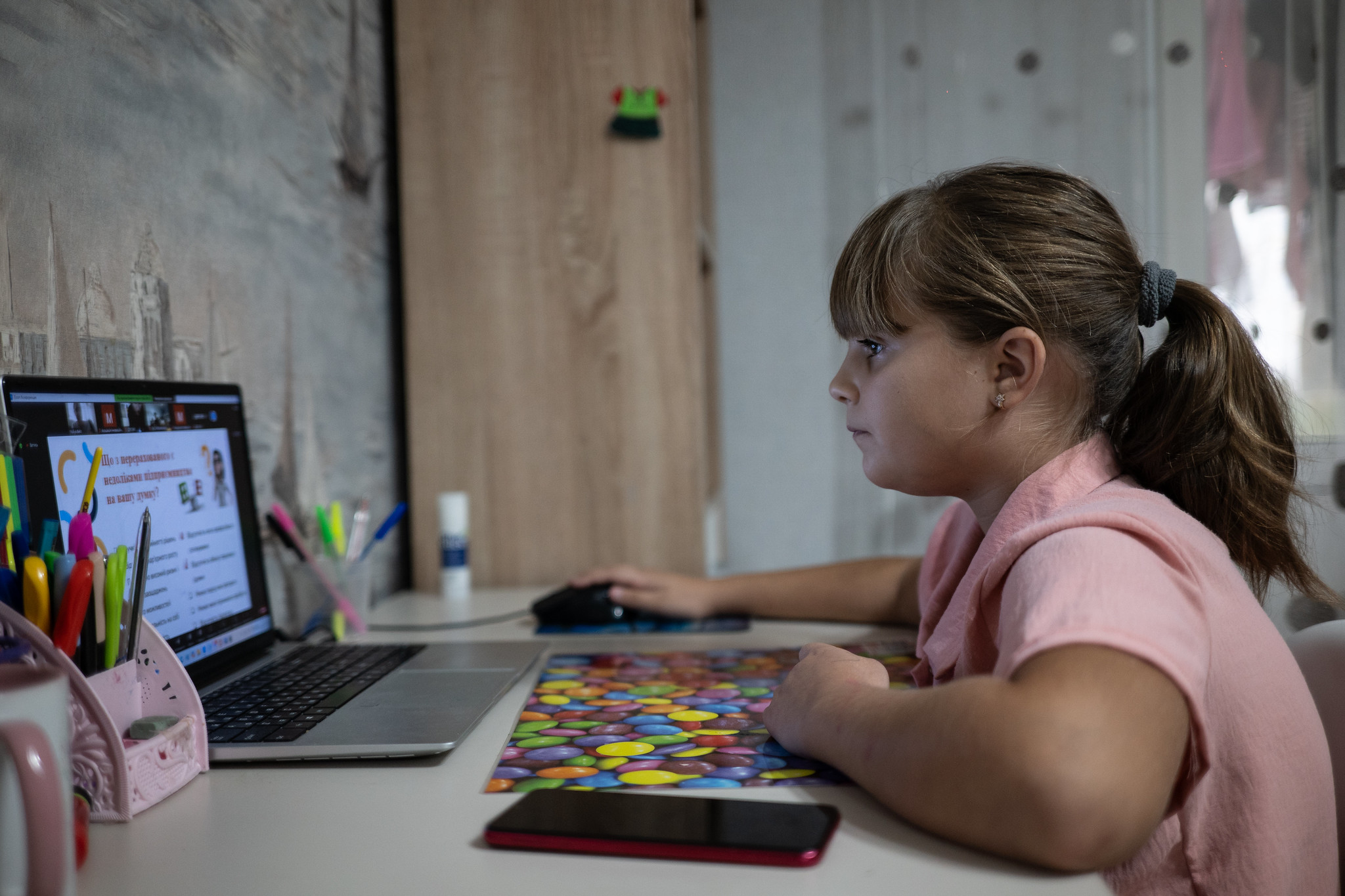
Across the Global Partnership for Education (GPE) partner countries in Eastern Europe, the Caucasus, and Central Asia, natural, conflict-related, and public health crises have disrupted the education process and exposed—and deepened—long-standing structural weaknesses. These crises widen access gaps, interrupt learning, and erode quality, with the heaviest consequences borne by the most vulnerable. As these disruptions compound, education systems can no longer treat each crisis as exceptional. They must anticipate risks, adapt in real time, and build the capacities needed to protect learning before the next shock arrives. This is what international development practice increasingly calls “education system resilience”: intentional, system-wide efforts to sustain education against a widening spectrum of disruptions.
In this blog, we share key insights from a desk review report which examined how GPE partner countries in Eastern Europe, the Caucasus, and Central Asia—Albania, Ukraine, Moldova, Georgia, Uzbekistan, Tajikistan, Kyrgyzstan, and Mongolia— understand and practice education system resilience.
The term “resilience” is rare; the work is not
The term “education system resilience” is not widely used in the countries reviewed. Instead, the broader term “resilience” appears mainly in national development documents (overarching strategies, reform effectiveness assessments, and recommendations from international partners), often without an explicit link to the education sector. For example, Mongolia’s Vision 2050 discusses resilience in the context of long-term national development, emphasizing social cohesion, disaster risk reduction, and climate action.
Within education, “resilience” tends to be framed through crisis management or used to describe threats and challenges facing the system. In education-specific discourse, synonymous or adjacent concepts are more common—such as effectiveness, stability, adaptability, relevance, modernization, quality enhancement, and sustainability. In Ukraine, a closely related and more widely used term is stiykist, which encompasses “resilience, robustness, stability, and endurance,” and is somewhat broader than the English-language use of “resilience.” Variants of this concept are also familiar and commonly used in several other countries in the study.
By contrast, the term “resilience” appears more frequently in the documentation of international organizations supporting the development of national education systems—particularly when they assist with drafting or revising sector documents. It features in conference reports, consultations and recommendations on system development, monitoring and analytical studies, assessments of reform effectiveness, and documentation on international support and cooperation.
Although the term “resilience” is not widely used, countries have policies or practices that help build education system resilience. Across the board, countries are working to expand access and quality, modernize curricula, improve governance and EMIS, raise teacher quality, address teacher shortages, and upgrade education infrastructure. The COVID-19 pandemic also accelerated system-wide digitalization, prompting national online platforms, device distribution, and connectivity mapping—steps that now underpin continuity of learning during future shocks.
Strengthening, planning, responding: but still mostly reactive
Most current resilience-related efforts focus on system strengthening, planning, and responding to shocks and disruptions as they occur. By contrast, practices that emphasize anticipating future risks, preparing the education system in advance, and mitigating potential disruptions receive far less attention, even though these are the levers most likely to reduce future crises and inequities. As a result, resilience efforts in the region are largely reactive.
System strengthening initiatives typically tackle unequal access, teacher shortages, outdated curricula, and digital divides through practical measures: improving school transport and infrastructure, introducing teacher certification and performance pay, expanding inclusive education, and building online learning platforms. Planning efforts similarly emphasize curriculum modernization, digital literacy, teacher professional development, quality assurance, and inclusion.
Context shapes priorities. For example, in Central Asian countries with mountainous and hard-to-reach areas, one priority has been safeguarding education access and quality, in part through digitization. In Kyrgyzstan, the government has partnered with local and international organizations to expand internet connectivity to schools in mountain regions. Mongolia has taken a similar approach, using digital solutions to reach nomadic and rural learners during harsh winters.
GPE partner countries in the region have faced a wide range of disruptions, including earthquakes, floods, droughts, extreme winters, border clashes, and armed conflict. Responses have generally been reactive, focused on addressing consequences rather than mitigating risks in advance, with efforts centered on restoring learning and repairing damaged infrastructure. Yet, past crises have helped countries respond more effectively to new ones. Ukraine, for example, drew on its COVID-19 distance-learning playbook during Russia’s full-scale invasion, enabling teachers and students to pivot more quickly to remote and hybrid learning.
Forward‑looking risk analytics and early warning systems remain fragmented and, where they exist, are typically embedded in national disaster risk reduction (DRR) strategies rather than education‑specific plans. These DRR frameworks call for continuous hazard monitoring, risk assessment that identifies vulnerable groups, and checks on infrastructure and school safety. Since the COVID‑19 pandemic, many countries have placed greater emphasis on forward‑looking monitoring and reporting, but approaches remain uneven across the region. In practice, anticipation still leans on lessons from past shocks, with initiatives centered mainly on natural‑hazard forecasting and preparedness. For example, in Uzbekistan, some schools in mountain villages have verified the functionality of on-site weather stations and conducted preparedness training for teachers, students, and local residents.
The limited emphasis on forward‑looking risk analytics and early‑warning systems in the education sector is partly due to economic instability and tight education budgets across the region. With resources stretched, ministries prioritize immediate service‑delivery gaps—keeping schools open, updating curriculum, repairing facilities, and paying teachers—over building anticipatory capabilities. In this context, international partners (e.g., UNICEF, the World Bank, the EU) have frequently provided technical assistance and financing to design DRR measures, strengthen data systems, and fund safe‑school investments.
Where vulnerability and disruption intersect
When disruptions strike, vulnerable learners are hit first and hardest. Across the region, several groups face consistently higher barriers to learning: children in rural, remote, and nomadic communities; learners from low-income households; children with disabilities; ethnic and language minorities; and migrants, internally displaced, and refugee learners. These risks frequently overlap, compounding exclusion and depressing attainment: for example, a rural child from a minority community without reliable internet. Countries have moved to safeguard learning for these groups by expanding school transport and rehabilitating facilities, providing language-bridging and inclusion supports, scaling girls-in-STEM initiatives, investing in national digital-learning platforms and connectivity, and expanding psychosocial services in and around schools.
During the COVID-19 pandemic, governments rapidly pivoted to distance learning through television and national online platforms to reach students without reliable internet or devices. They bridged the digital divide by distributing equipment and expanding connectivity. They strengthened psychosocial support—through hotlines and teacher training—to address heightened anxiety and stress among learners and educators, particularly those already at risk.
Beyond the pandemic, countries have tailored responses to context-specific disruptions. In 2023-24, Mongolia, with support from international partners, implemented the Dzud Emergency Education Response during one of its harshest winters, providing remedial classes, distributing devices for remote learning, and training teachers in psychosocial support. To assist Ukrainian refugee children, Moldova worked with international organizations to launch EduTechLab, offering psychosocial services, formal and informal learning, and leisure activities, while equipping centers with modern IT and preparing teachers to support newly arrived students.
Yet these efforts remain uneven, placing vulnerable learners at continued risk. Inclusion supports and adapted materials are inconsistent, particularly for students with disabilities and language minorities, while many remote areas still face connectivity gaps and shortages of qualified teachers. Heavy reliance on international partners and limited system-level monitoring further constrain governments’ ability to identify, track, and adequately fund support for those most at risk.
What’s next for the region?
As disruptions multiply, resilient education systems cannot rely on ad-hoc fixes. The charge now is clear: reinforce core functions, institutionalize risk scanning and early warning, run regular scenario planning, and respond in ways that protect learning and well-being—all while ensuring that the most marginalized children are consistently identified, supported, and able to succeed. The region already offers compelling proof points; the next step is to connect, institutionalize, and scale them with clear intent and sustained commitment.
The path forward is practical. Governments can budget for anticipation by embedding risk scanning, early-warning, and scenario exercises into routine planning with dedicated ministry and sub-national lines. They can scale what works by converting proven pilots—teacher professional development, inclusive language supports, remedial programs, and school connectivity—into national policy standards backed by domestic resources and costed implementation plans. And they can design for the margins first, planning transport, digital access, curricula, and assessments around rural learners, minorities, displaced children, and students with disabilities.
Finally, this agenda must be rooted in each country’s history and risk profile. That means pairing common resilience functions with context-specific solutions: earthquake-resistant school standards in seismic zones; shelters and hybrid learning in conflict settings; reliable connectivity for remote schools; and multilingual, inclusive policies alongside refugee integration where language and migration shape access. Sustainable implementation depends on pairing international support with strong domestic ownership. Only then can uneven support, heavy reliance on external partners, and fragmented anticipation capacities give way to systemwide guarantees that protect learning for every child.
Photo: Oleksandr Techynskyi / AP Images for GPE
This blog was first published on the GPE KIX website.
Support Cedos
During the war in Ukraine, we collect and analyse data on its impact on Ukrainian society, especially housing, education, social protection, and migration

 Support


