






We live in a world where crises are converging. Climate change, forced migration, conflict and economic shocks, to name but a few. In this context, strengthening education system resilience – the capacity to not only withstand shocks but adapt and evolve – is critical. Through the Observatory on Education System Resilience initiative, implemented under the Global Partnership for Education Knowledge and Innovation Exchange (GPE KIX), six regional observatories are helping to understand what education system resilience means across countries.
The Observatory in Eastern Europe, Caucasus and Central Asia (EECCA) has recently completed primary data collection through interviews with key informants in eight countries. While waiting for the full findings to be published later this year, we interview some of the researchers who have spoken to ministries of education, civil society organizations, international development agencies and more.
In a three-part blog series, we explore how education system resilience is understood and practised in different countries, what has changed because of past crises, and what needs to happen to prepare for future disruptions. In this last blog post, we speak with Komil Djalilov, an education specialist in Uzbekistan.
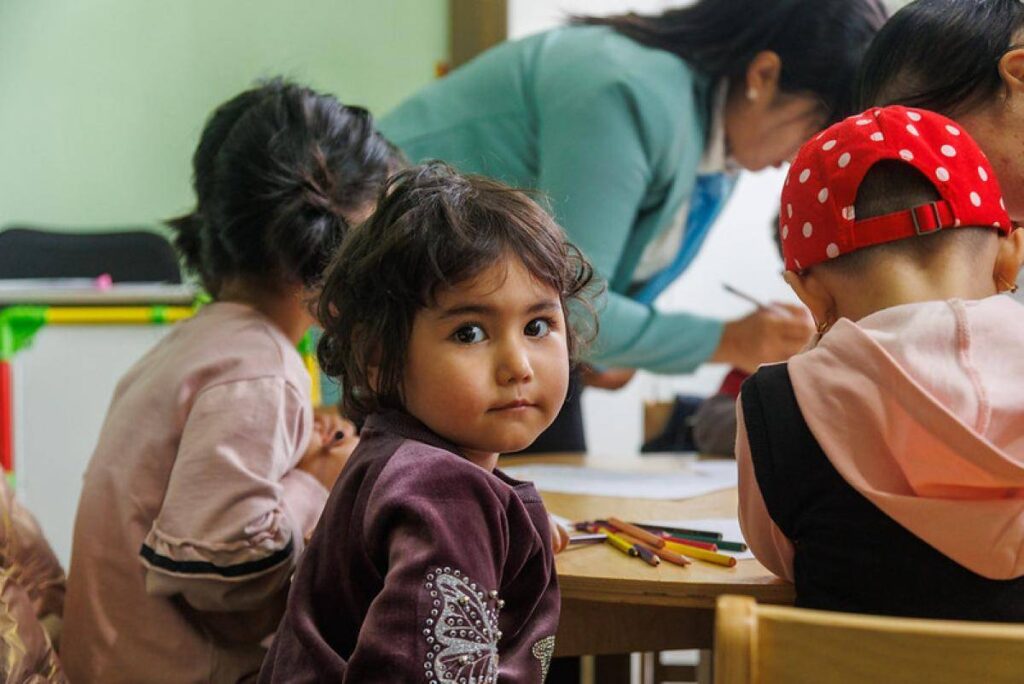
Credit: GPE/Federico Scoppa
Q.: What is the general perception people have of education system resilience? Is this a widely understood term and do most people understand it in similar ways?
I interviewed six education stakeholders in Uzbekistan, including representatives from government institutions, civil society organizations and international development organizations.
The interviewees pointed to a clear divide in how resilience is addressed by international partners versus national authorities. International organizations, such as the World Bank and UNICEF, view resilience as proactive risk mitigation and structural adaptation to economic, climate and other shocks. As such, they integrate education system resilience into their project design, funding frameworks and strategic documentation.
As for national policy, the concept of resilience remains largely abstract or absent. When government documents employ the closest Uzbek equivalent barqarorlik (i.e., sustainability or stability), this serves primarily as a formal, administrative catchphrase rather than a concept rooted in actual practice.
Informants added that top-level policy documents are well designed and could contribute to education system resilience, but they suffer from fragmented implementation on the ground. The Uzbekistan 2030 Strategy — which sets national development targets by 2030, including education — was mentioned as an example of this.
At the ministry level, governance relies too heavily on individuals (ministers and their teams), rather than robust institutionalized norms. For example, an incoming minister may stop active projects and structural reforms inherited from their predecessor, while launching new initiatives that sometimes contradict what has been done till then. As interviewees noted, this may contribute to creating systemic instability.
From the ministry down to regional, district and school level, the education system is highly centralized and relies on a multi-layered chain of command. Regional and district education authorities usually lack autonomy in decision-making. Because of the highly centralized system, schools have little autonomy and cannot innovate on the fly when local disruptions occur. Interviewees agreed that building genuine resilience will require granting schools, principals and teachers greater autonomy.
In addition, respondents highlighted that education data is not always accurate. This may be because manual gathering involves errors. In addition, as some noted, school administrators want to put their best foot forward when sharing performance data with central authorities (e.g., by inflating attendance rates or masking infrastructure deficits). As a result, what they share may not always reflect reality. This may mean that decision-makers usually operate on unreliable figures, which affects the system’s ability to anticipate, diagnose and respond to vulnerabilities.
As interviews showed, resilience in Uzbekistan is not a feature of the education system itself but of the educators in the system. Interviewees noted that true resilience is embodied by enthusiastic teachers and principals, particularly in under-resourced rural areas. Faced with little to no government support, they do all they can to preserve teaching quality by tapping into their personal finances to secure learning supplies, water coolers and heating resources.
Q.: Have the informants identified any disruptions to education systems that have informed new policies and practices, making the systems stronger and more resilient?
When examining recent shocks that have impacted Uzbekistan’s education system, respondents focused on two major crises: the COVID-19 pandemic and the 2020 Sardoba reservoir dam failure. Severe winters were also mentioned.
The response to the pandemic highlighted that rapid, successful adaptation was possible. With all public offices and private business closed, the Ministry of Public Education launched the Online School project, broadcasting recorded video lessons across national television channels. Local free-to-air TV channels were chosen because many rural and low-income families do not have laptops or reliable internet. Thanks to this, almost everyone was reached — even in areas with poor infrastructure.
Interviewees noted that, while helpful at the time, the potential of this initiative was not fully realized: crisis-driven innovations, like e-learning, could have made the education system stronger if they had been built into permanent practice — but that was not the case. Once the pandemic subsided, the Online School project was closed and the government mandated a strict return to in-person schooling.
A similar pattern emerged from the 2020 Sardoba Water Reservoir failure, when the severe flooding of several populated areas displaced about 70,000 people. Displaced children were moved to neighbouring schools until education could resume in theirs. However, this was more thanks to a reactive local support network rather than a structured response from the government.
As informants noted, the default national approach remains largely ad-hoc and reactive, with no publicly available contingency strategies or standardized emergency protocols on how to act during major disruptions.
When severe cold waves struck in winter 2023, the education system’s response was to extend student holidays nationwide, leaving learning continuity to the mercy of weather conditions. According to informants, a more forward-looking approach would have been to investigate the readiness of the school infrastructure to extreme weather conditions, so that corrective action could have been taken to prepare for the future.
Q.: What are the most anticipated future disruptions to education and how is the country preparing for them?
When asked about major challenges that could affect Uzbekistan’s education system in the next five to ten years, respondents focused on the current systemic issues that they believe need to be addressed to ensure readiness for future disruptions. They include:
· A massive shortage of school seats and unequal distribution of resources. Many public schools are congested with around 40 students per room, and have to work in double or sometimes triple shifts (i.e., separate groups of students rotate through the same space across the day). At the same time, a handful of highly competitive schools for gifted children receive priority funding, boasting small classes, superb facilities and high-paid foreign teachers.
· The human capital deficit. Low salaries in public schools and a historical lack of meritocracy have marginalized the teaching profession.
· Inadequate infrastructure. Extreme seasonal temperatures and acute water scarcity pose immediate threats. The infrastructure of many schools built during the Soviet period is not ready for high and low temperatures, lacks air conditioning facilities, and relies on coal burning and shut windows when it’s cold outside.
· Gender and minority disparities. Poor infrastructure badly undermines equity. The lack of indoor sanitation and running water in rural regions routinely forces teenage adolescent girls to miss classes during their periods. Furthermore, offering education in seven different languages ensures access for ethnic minorities on the one hand, but places a massive burden on teacher training and textbook publishing on the other. In addition, minority-language schools often lack qualified teachers, especially in science, technology, engineering and mathematics (STEM) subjects.
· Outdated teaching methods. Traditional rote learning methods fail to account for the soft skills the modern labour market demands.
As informants observed, the government has recently begun to officially acknowledge and address some of these systemic problems. For example, a road map was adopted to bring water, heating, and hygiene facilities to schools and upgrade them to comply with national water, sanitation and hygiene standards. To make the teaching profession more attractive, salary bonuses are being offered to teachers who score well on standardized tests in subject matter and pedagogy.
However, these initiatives are mostly reactive. Lack of coordination among international donors is another issue. While some projects overlap and duplicate efforts, other issues – like uneven access to quality education and the widening gap between specialized and mainstream schools – remain unaddressed.
In conclusion, these interviews offered valuable insights by connecting high-level policy vision with the day-to-day realities of schools and communities across Uzbekistan. A more resilient education system requires proactive, data-driven governance that addresses internal institutional vulnerabilities alongside external shocks. As interviewees highlighted, when educational management relies on individual leadership styles rather than institutionalized norms, and initiatives shift rapidly without a unified long-term vision, the system itself can become a major source of instability.
One important take-away that emerged from the interviews is this: If decision-makers and development partners want to strengthen the country’s education system, they need to focus on three main priorities: 1. establishing merit-based, depersonalized governance to ensure reform continuity across administrative cycles; 2. making competitive investments in teachers; and 3. guaranteeing equitable access to quality instruction for children from different socio-economic and linguistic backgrounds.
The views expressed by the interviewees and researcher do not necessarily represent those of GPE or its partners.
The full regional findings of the Observatory in Eastern Europe, Caucasus and Central Asia (EECCA) will be published in a report later in 2026. Explore previous blog posts in this series on Ukraine and Kyrgyzstan.
This blog was first published on the GPE KIX website.
Support Cedos
During the war in Ukraine, we collect and analyse data on its impact on Ukrainian society, especially housing, education, social protection, and migration

 Support


