






The project was implemented by the “NAVKOLO” Charitable Foundation. The spatial mentor is Oleksandr Makarenko, an architect and co-founder of the Urban Design architectural studio. The programme mentor is Kateryna Yakovets, a spatial planner and project coordinator.
The space was created as part of Community reBuilding – a project to develop community-building centres run by Cedos and UMAEF.
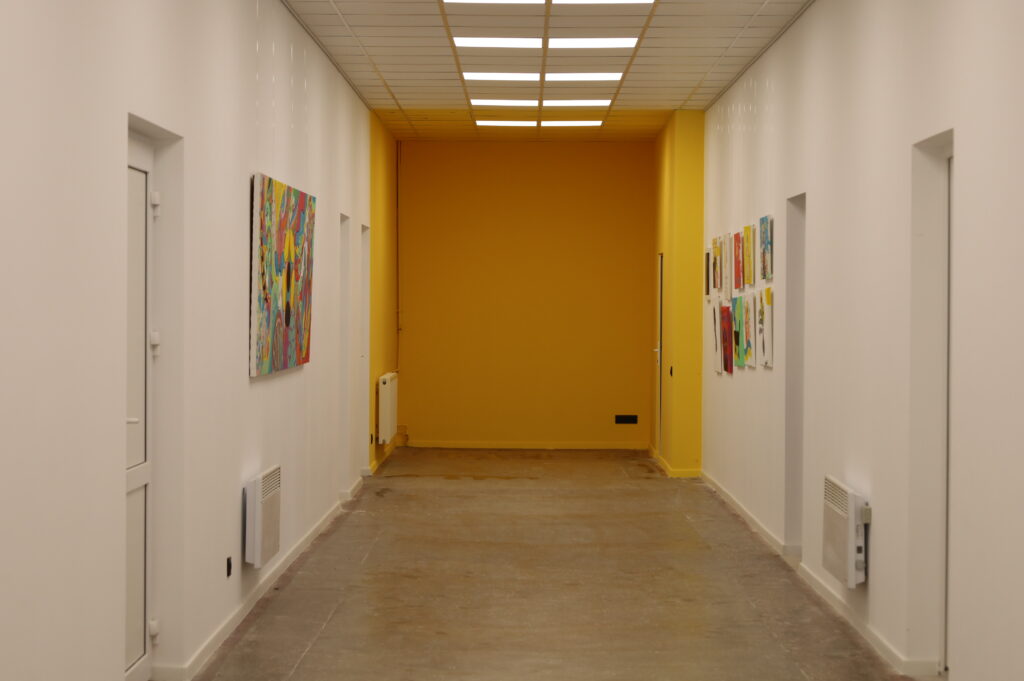
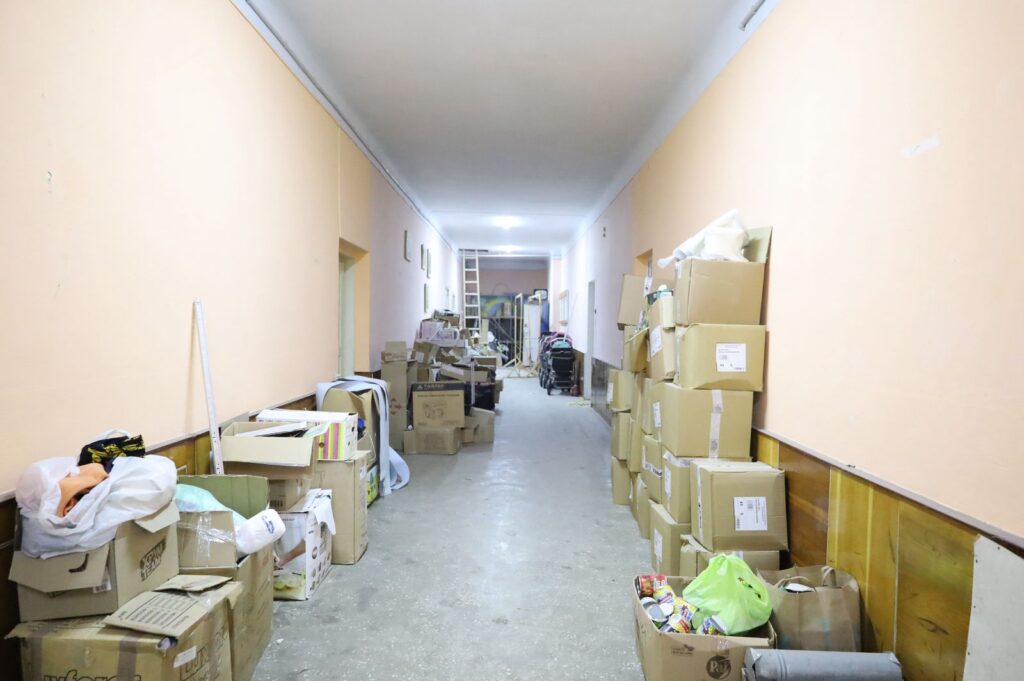
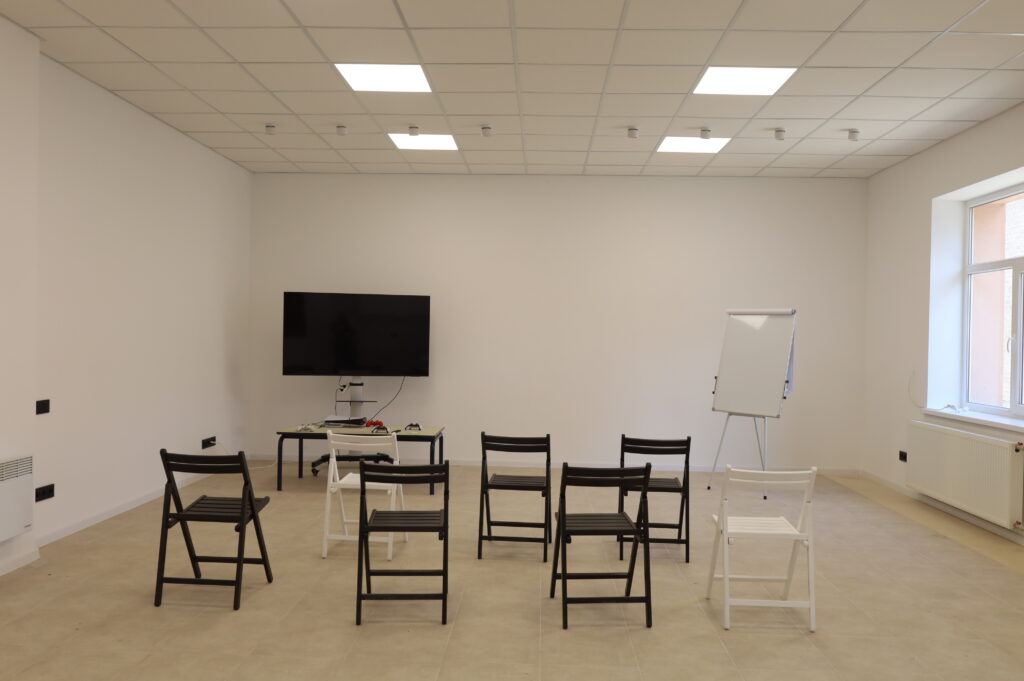
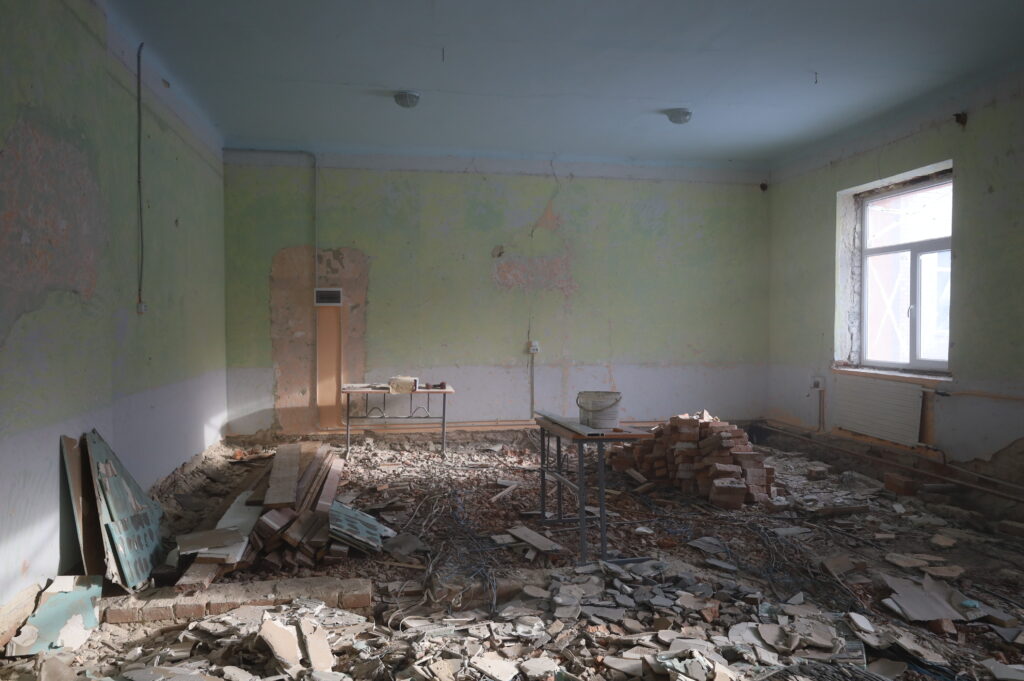
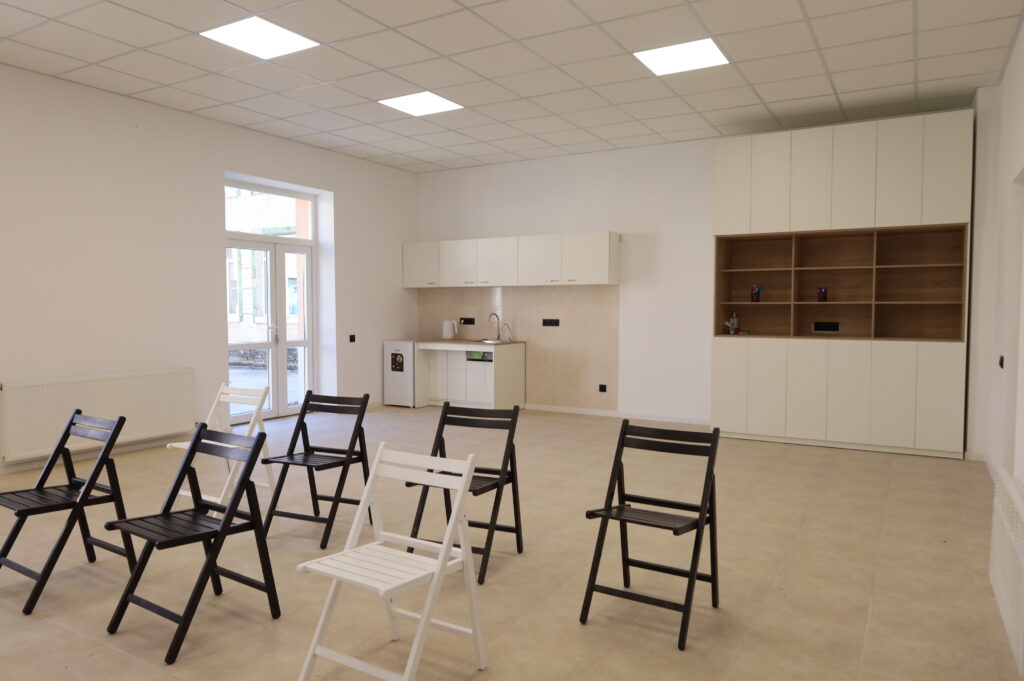
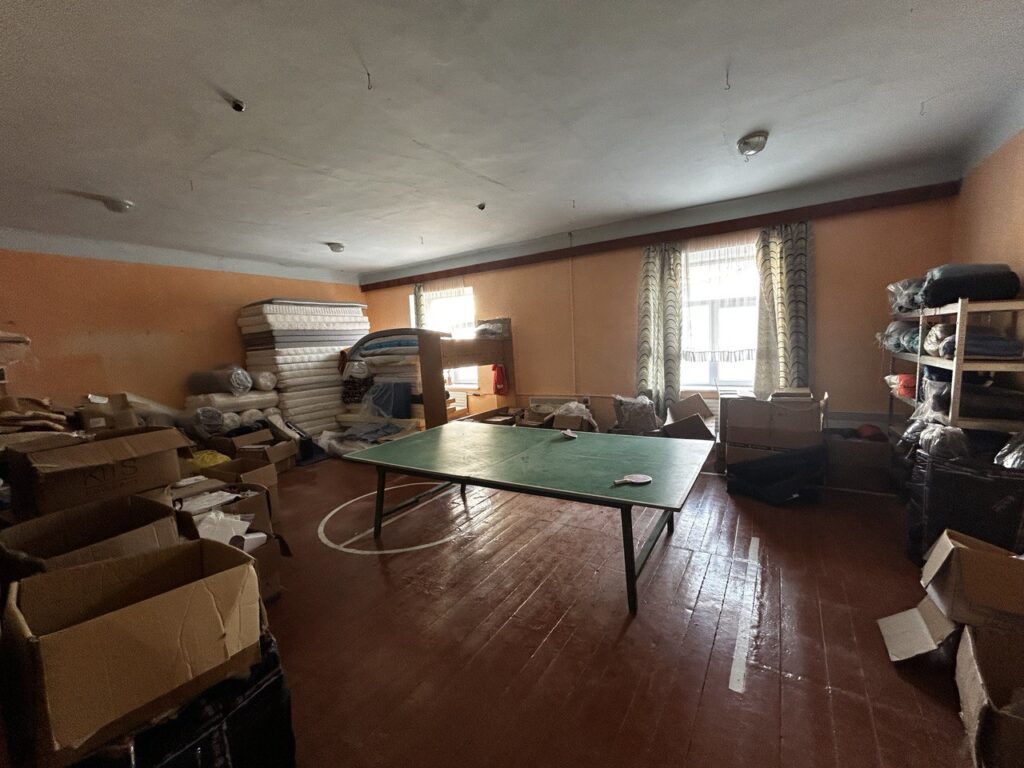
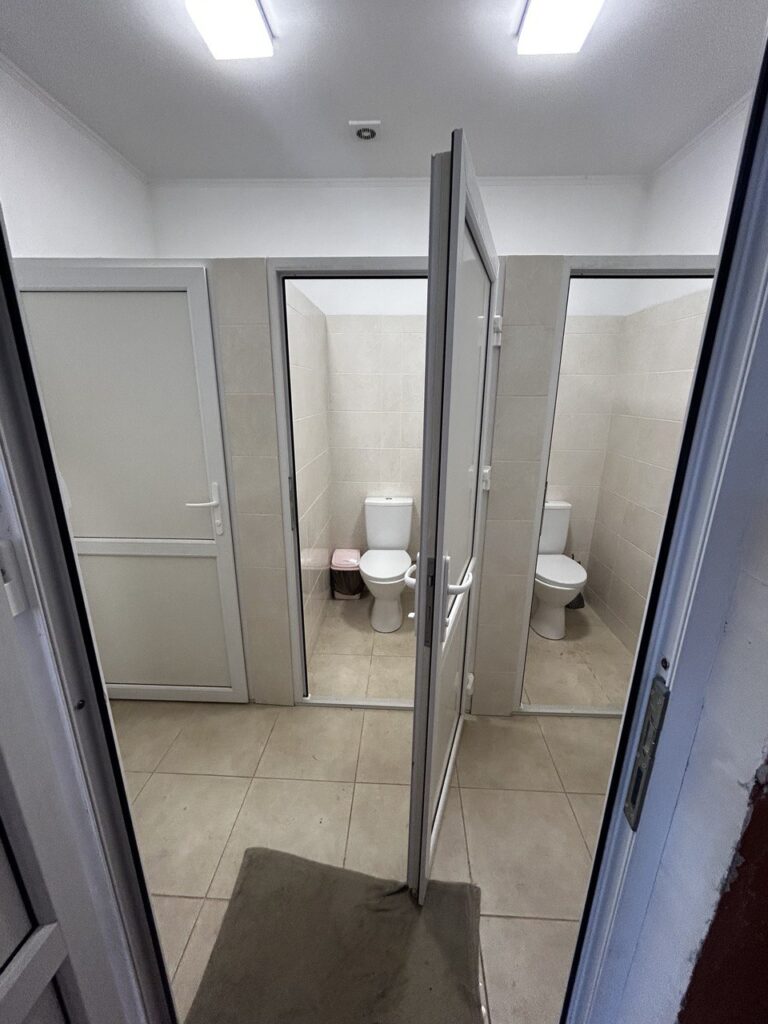
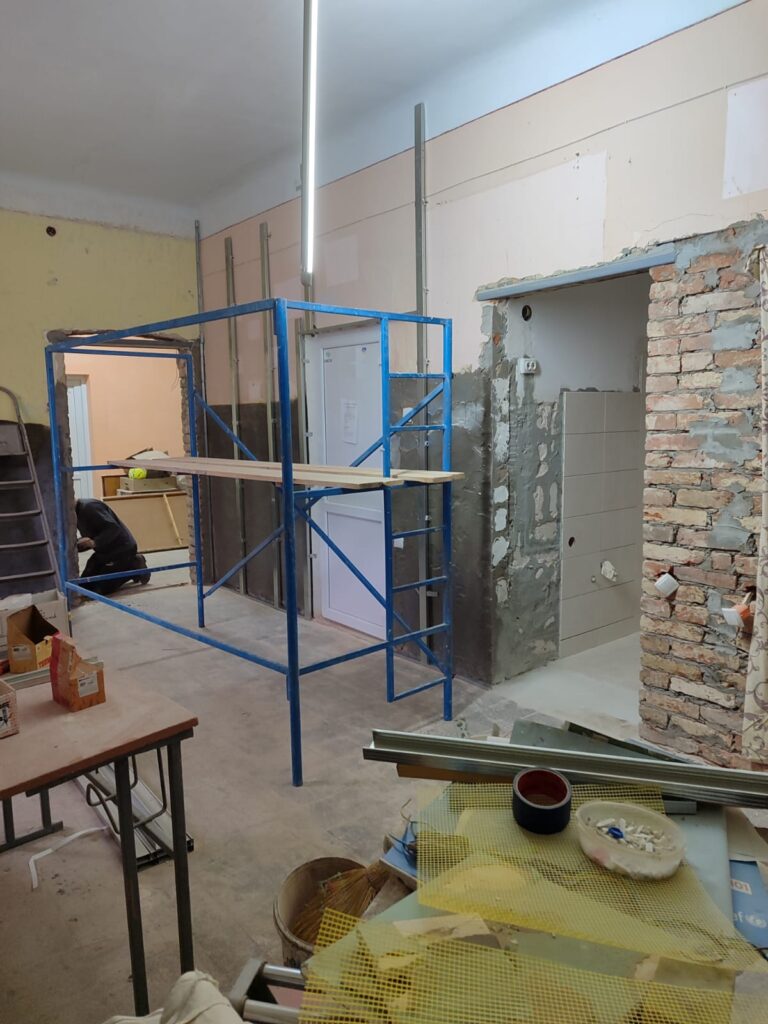
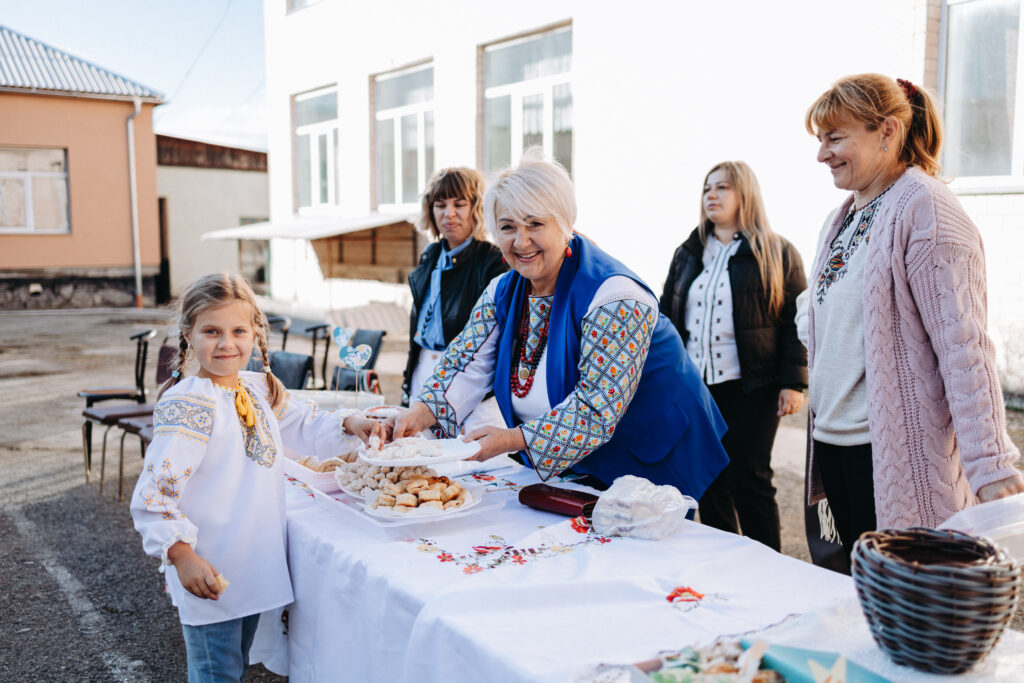
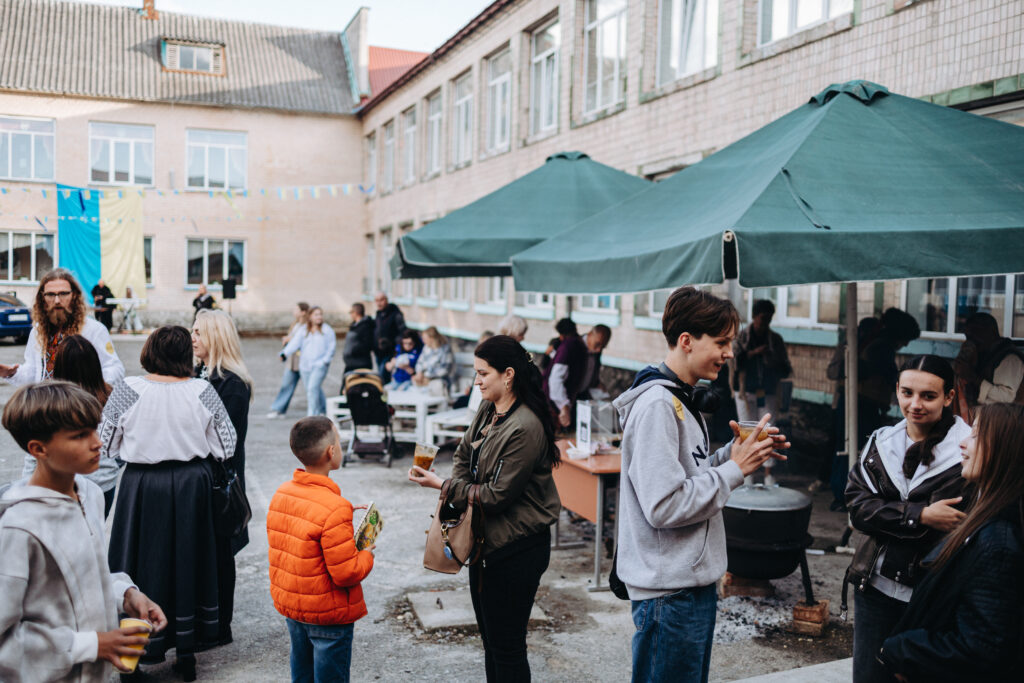
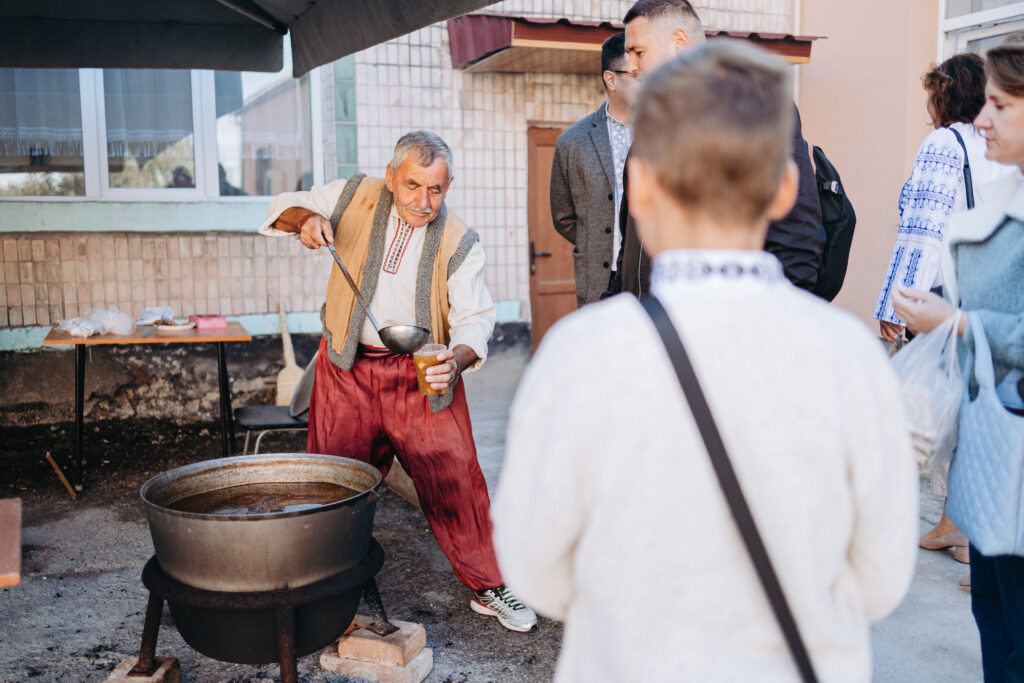
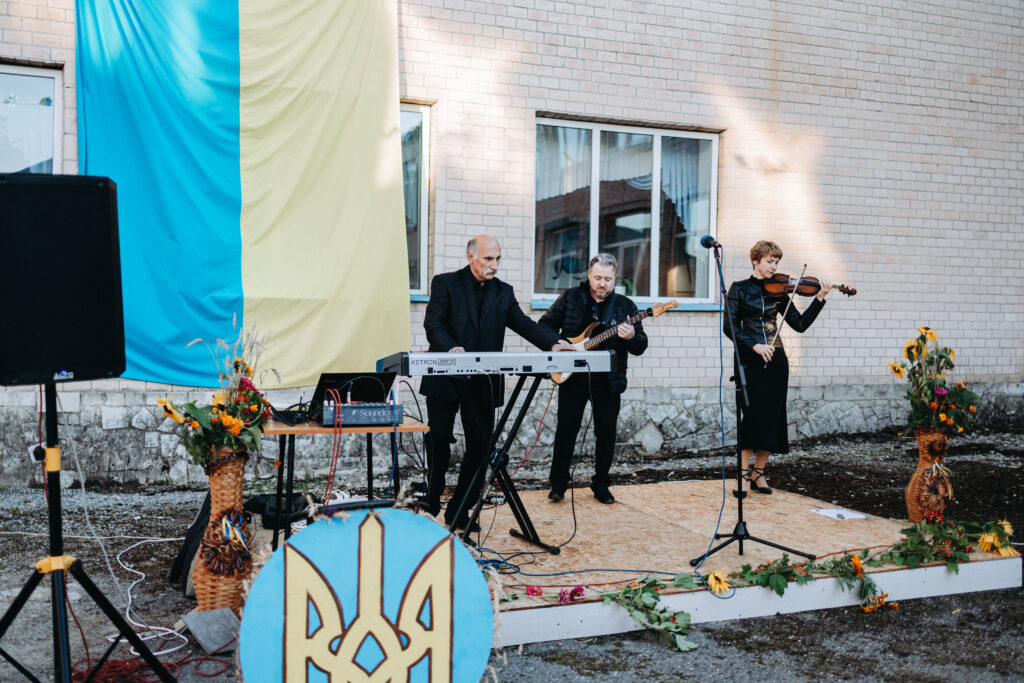
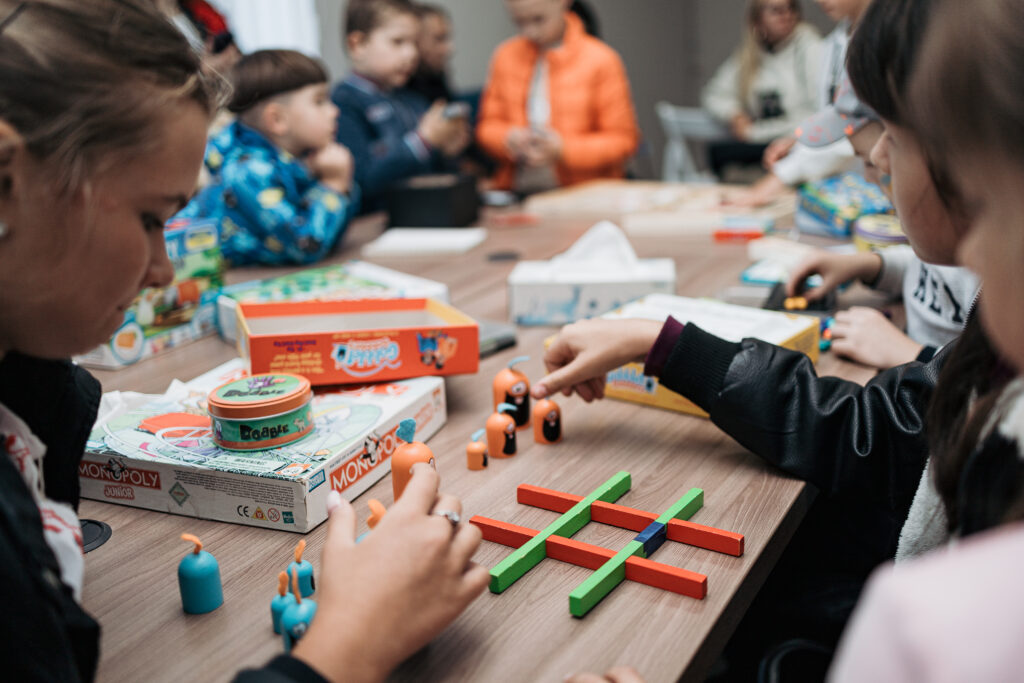
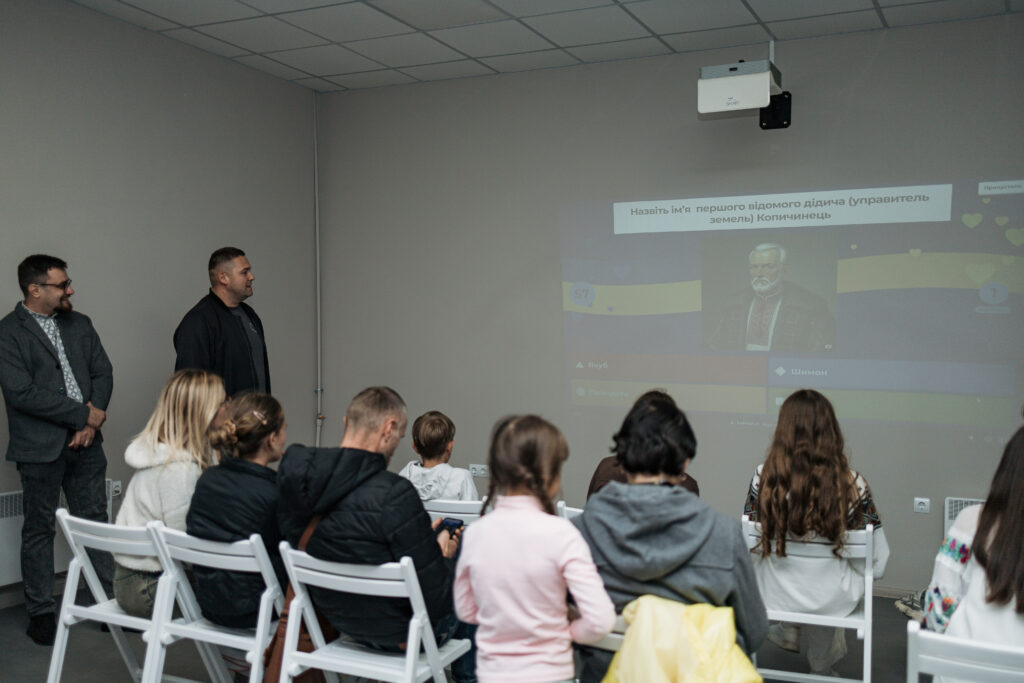
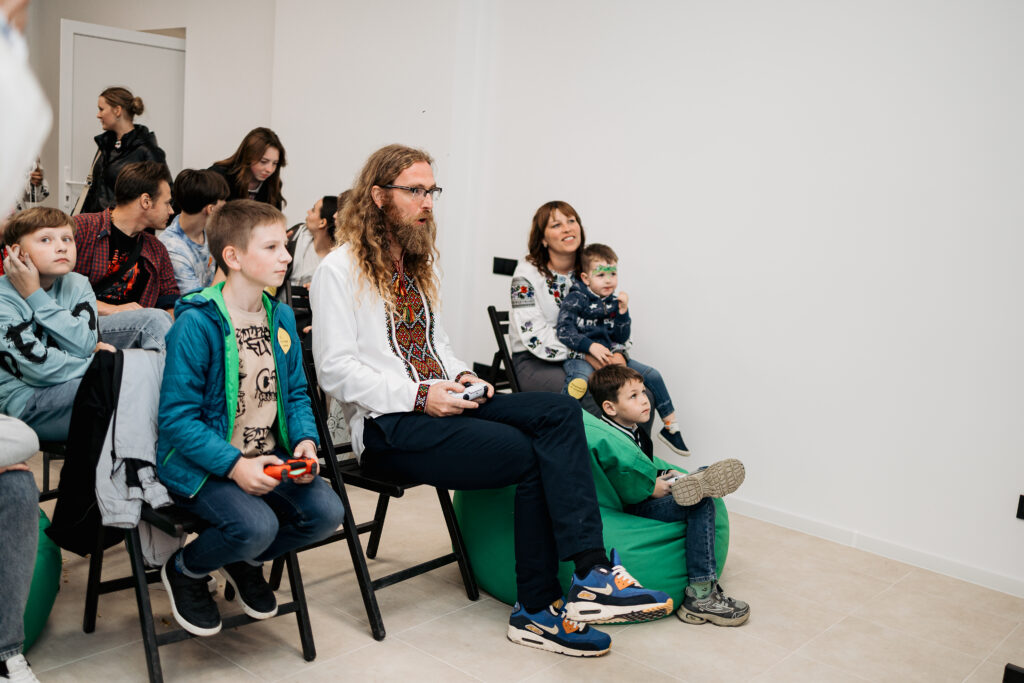
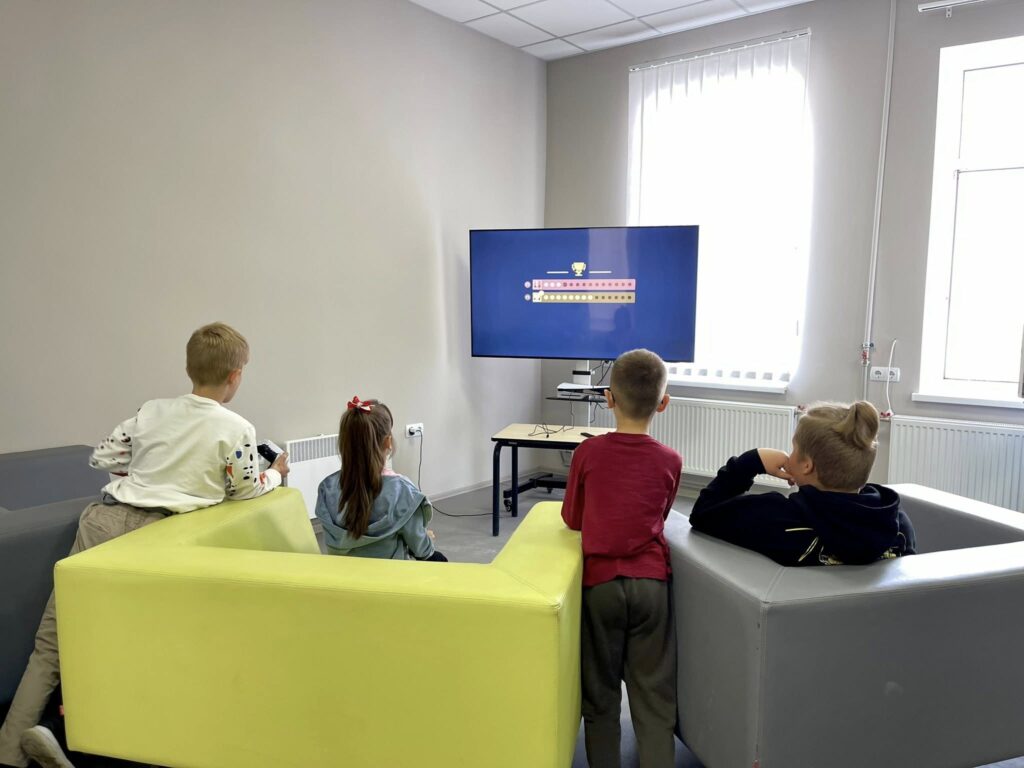
The opening featured a concert by the School of Arts, a charity fair selling homemade treats, and a host of interactive activities. At the event, visitors could take part in a history quiz or a video game tournament, play board games in Ukrainian and English, go on a treasure hunt, or get creative at the workshops. In addition, there was a “speed-friending” session where visitors could get to know one another quickly.
During the fair, the hromada raised 15,000 UAH to support the Armed Forces of Ukraine, whilst for the centre’s team, the event provided an opportunity to engage new partners and volunteers in the Centre’s activities for the first time.
We started with a tiny, old sports hall, and ended up with a bright, lively space that opens out to the outside world. This was made possible by the team’s willingness to embrace bold changes and their determination to realise the vision to the fullest – right up to the launch of a crowdfunding platform, which expanded funding and allowed us to bring more ideas to life than the grant alone would have permitted. The residents of Kopychyntsi now have a comfortable, accessible and meaningful space – for every member of the hromada.
Oleksandr Makarenko, spatial mentor at the “Navkolo” Centre, architect and co-founder of the Urban Design architectural studio
About the “Navkolo” Community-Building Centre
Amidst the war and constant change, the Kopychyntsi hromada was in dire need of a space for coming together, mutual support and development. Of the 7,000 residents of Kopychyntsi, over 800 are internally displaced persons. The “Navkolo” hub has become a place where people of all ages, social statuses and backgrounds can find support, realise their potential and contribute to building a strong community. The project helps to integrate people into a stronger and more active hromada.
“Navkolo” has become exactly what was so sorely lacking – a place where ideas are born, initiatives are launched and a sense of community is forged. People have started to meet more often, discussing not only problems but also opportunities. There is now a realisation that together we can achieve more – and this is, perhaps, the most valuable change of all.
Valentyna Tryukhan, manager of the “Navkolo” project
The space is located on the premises of Lyceum No. 2 in Kopychyntsi. The lyceum already houses a Humanitarian Centre and a community launderette. “Navkolo” has a separate entrance and its premises are separate from the school. The community-building centre features:
- A gallery corridor where works by local artists, photographers and craftspeople are regularly exhibited.
- A multi-purpose events hall where, thanks to modular furniture, it is possible to host both intimate gatherings for 10–15 people and large-scale presentations for 50+ participants.
- A co-working space with a separate soundproof Zoom room.
- A children’s area equipped with play equipment and climbing frames.
- A kitchenette with a fridge and kettle.
The name “Navkolo” symbolises comprehensiveness and inclusivity: the project team creates an environment where everyone can find their place and feel supported. The space offers educational and cultural events, psychosocial counselling, support groups, and initiatives to support small business development, entrepreneurship and community initiatives.
Currently, the “Navkolo” centre runs several regular programmes:
- English Camp 2.0 – an English language programme that combines language learning with cultural exchange and the development of communication skills.
- Board game evenings. Every Wednesday, events are held to encourage informal socialising and community bonding.
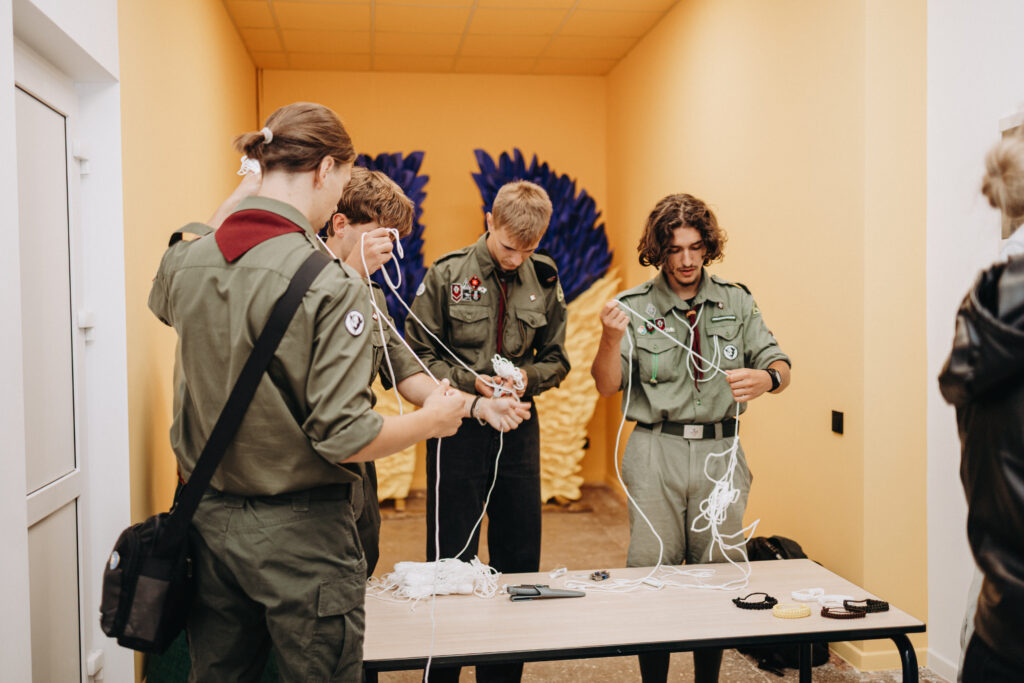
- Weekly Plast meetings, which include patriotic education, leadership skills development and teamwork training for young people.
- Free legal advice. A paralegal from the “Right to Protection” Charitable Foundation provides free initial legal advice.
Before the community-building centre began its work, the team organised two community work days. During these events, local residents made and painted street furniture from pallets to furnish a relaxation area and planted greenery around the site. The gardening work was combined with a trial PlayStation tournament and board games. Participants also created a collaborative painting, which became a symbol of the hromada’s unity and creative collaboration.
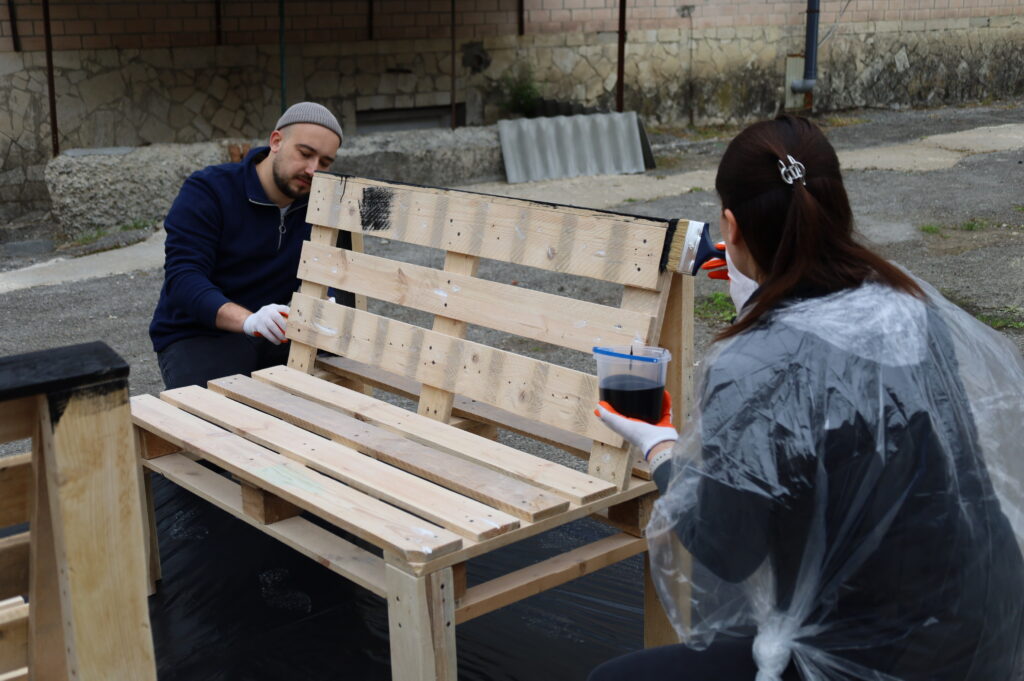
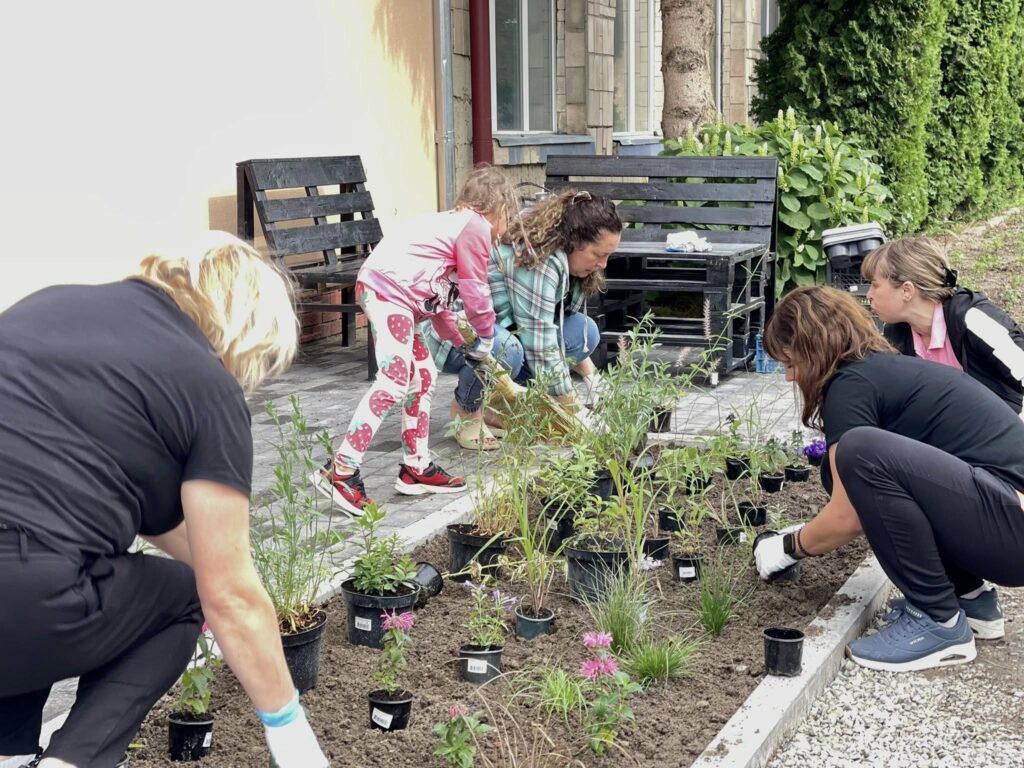
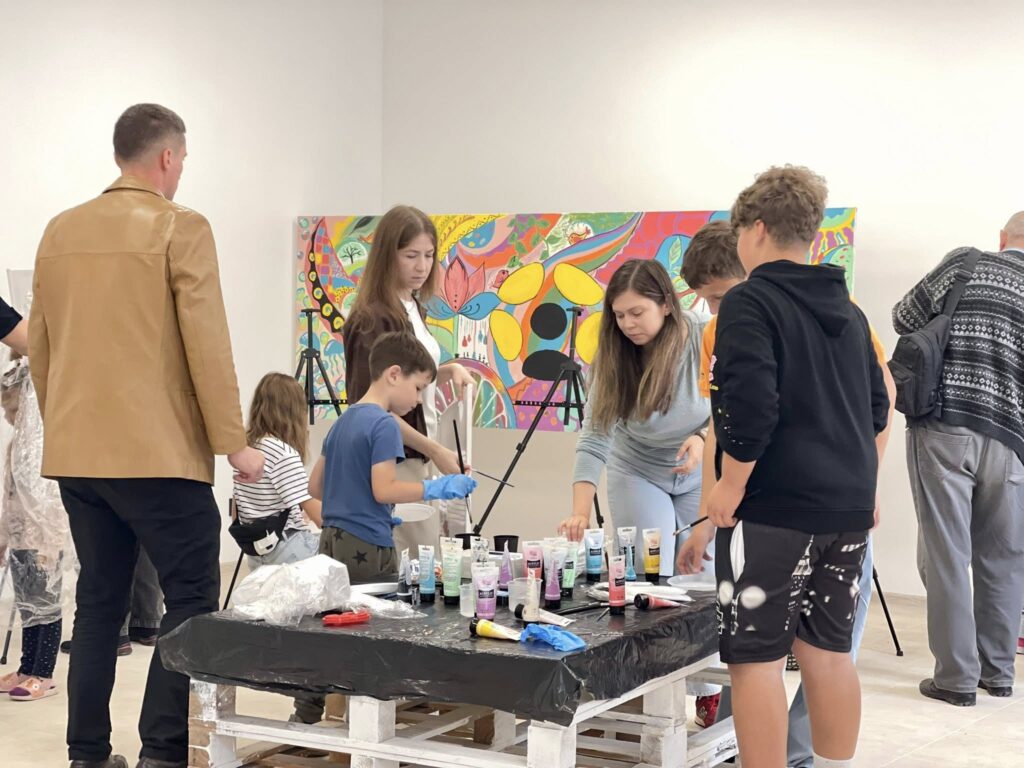
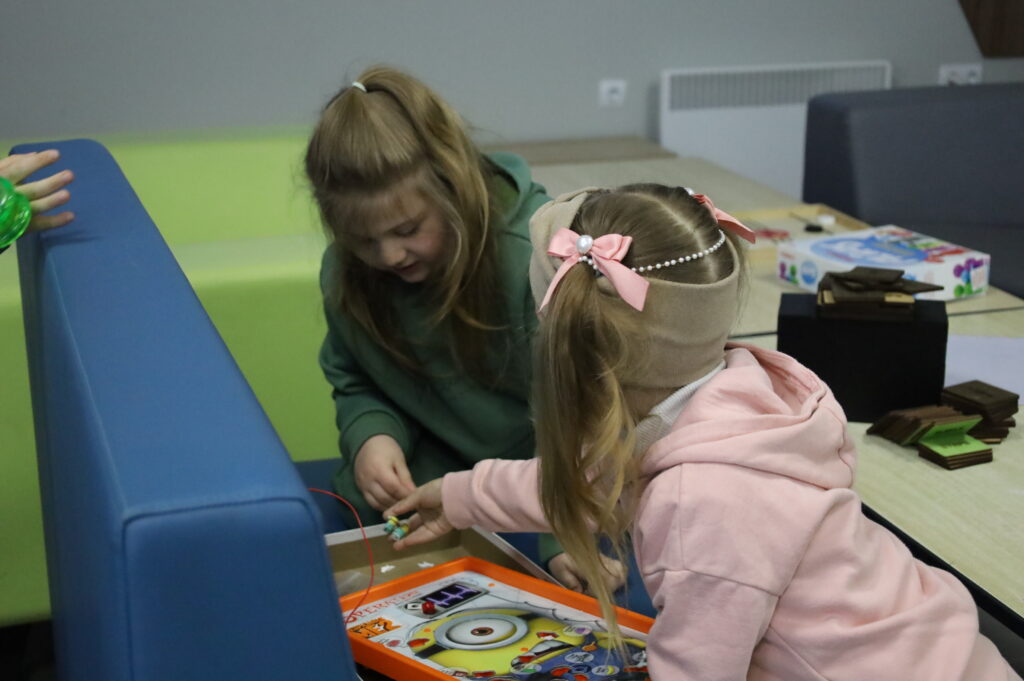
In the process, the team managed to mobilise active local communities, secure the support of twin towns abroad, and, through the combined efforts of the team, responsible local entrepreneurs, patient craftspeople, and residents of all ages who joined the community work days, they created a vibrant urban space that inspires and spurs new initiatives.
Kateryna Yakovets, spatial planner and project coordinator
Support Cedos
During the war in Ukraine, we collect and analyse data on its impact on Ukrainian society, especially housing, education, social protection, and migration

 Support


